“And I thought 'Christine, Christine, Christine’!”
I got a voice note from my dear friend. They were listening to a radio program and seeing a lot of parallels to me. Hm!
So here we are: sitting at my desk, ready to listen to the radio while keeping a journal to share my impromptu reflections. Ready? Let's go.
It's a conversation on ARD Jazz. Spotlight with bassist and neuroscientist Peter Vuust from Denmark who founded and leads the “Center for Music in the Brain”.
Ah, we start with some of his beautiful music. Now, let's hear what Peter has to share with us.
My 3 key takeaways and reflections:
[1] Music and science inspire each other
Peter practices every morning, goes to work, and performs at night. He gets his ideas for scientific studies while practicing and his musicianship helps him to decide what's interesting.
✍️ Music and science inspire each other – do I agree?
100%. Otherwise, I wouldn't be where I am right now. I had my big mental breakthrough surrounding a jam session. I wondered, wouldn't it be wonderful if we all interacted the way those musicians did on stage? That was the seed of my Integral Improvisational Coaching.
Today, I see my two backgrounds like this:
🎷 Music = Improvisation, Creativity, Emotions
🔬 Psychology = Science, Structure, Reason
We need both to thrive in today's ambiguity and uncertainty!
[2] Improv's speciality? Communicating as a group while having your own voice
According to Peter, the specialty of improvised music is how we communicate. We improvise differently but still go in the same direction. We can communicate while others communicate at the same time. And within this group communication we still maintain our own voice. This forms a strong feeling of being together, a “together sensation” as a group.
✍️ Communication as improv's speciality – do I agree?
Yes, it’s about how we communicate and how we relate to each other. I especially resonate with the integral part – we belong to a group while staying an autonomous individual. We all have our own special way but we are aligned through our shared common purpose.
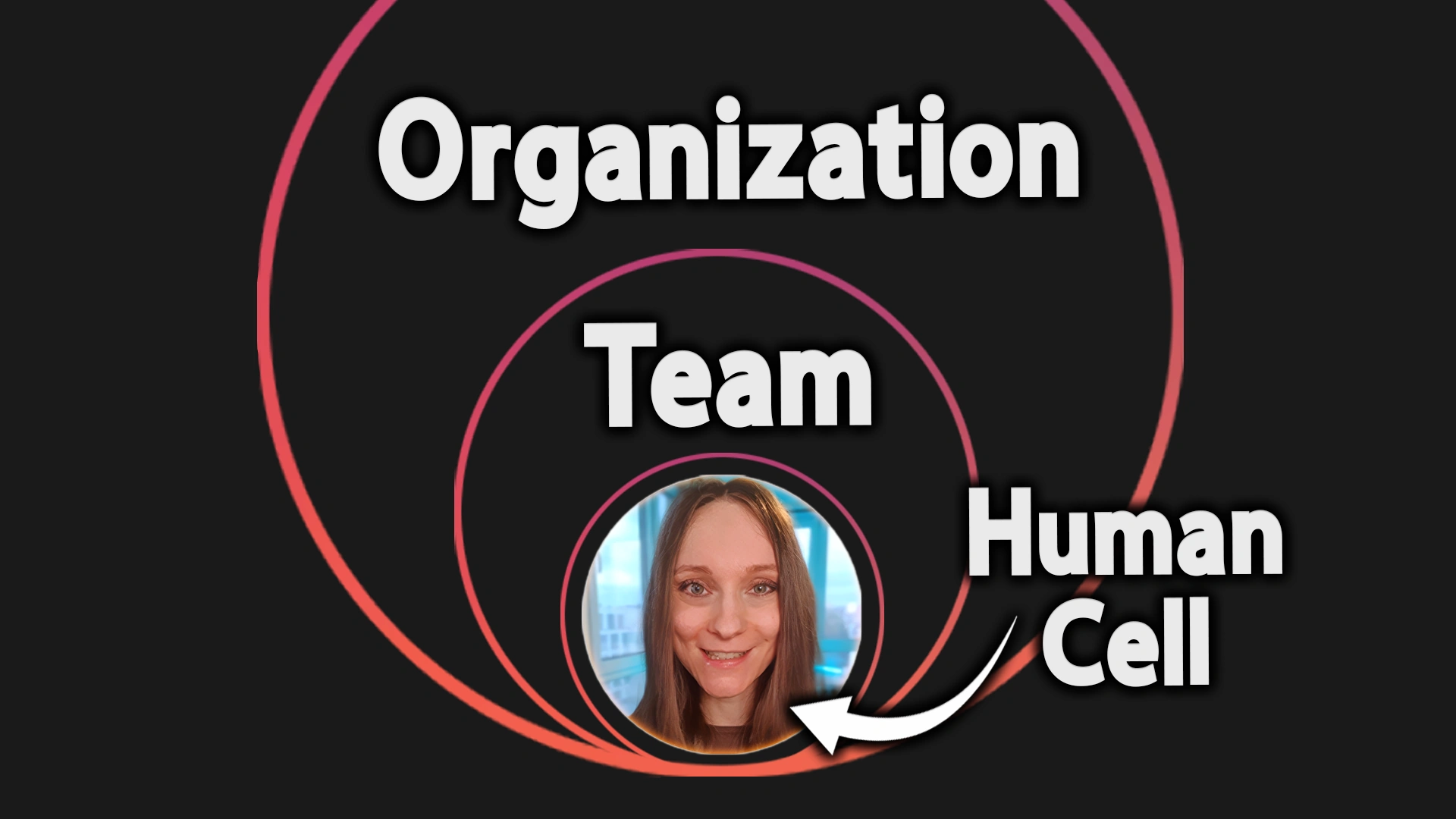
I see this in healthy organizations or teams, where you have a strong drive to collaboration and connectedness and a similarly strong drive to freedom and autonomy. It's the both-and paradigm and goes hand in hand with the fourth perspective of my coaching approach, where we consciously design those polarities.
[3] Improvisers are continuously challenging each other in a high-creative process
Peter and his colleagues had improvising musicians' brains scanned. Three brain areas were active: the ones active when generating ideas, when deciding which ones to act on, and especially the ones when deciding which ideas are good. Unlike AI, according to the radio program, just a few familiar patterns are enough for improvisers to create something surprisingly new. And when multiple improvisers improvise at the same time and continuously challenge each other, we experience a high-creative process.
✍️ Challenging each other as a high-creative process – do I agree?
We appreciate and challenge each other. We listen and we respond. And besides the music itself, this leads to what I call in my approach, our inner common groove – an energizing unique relationship with each other.
Yes! And wouldn't it be wonderful if we all interacted that way?

Christine Paulus
ENGLISH | DEUTSCH