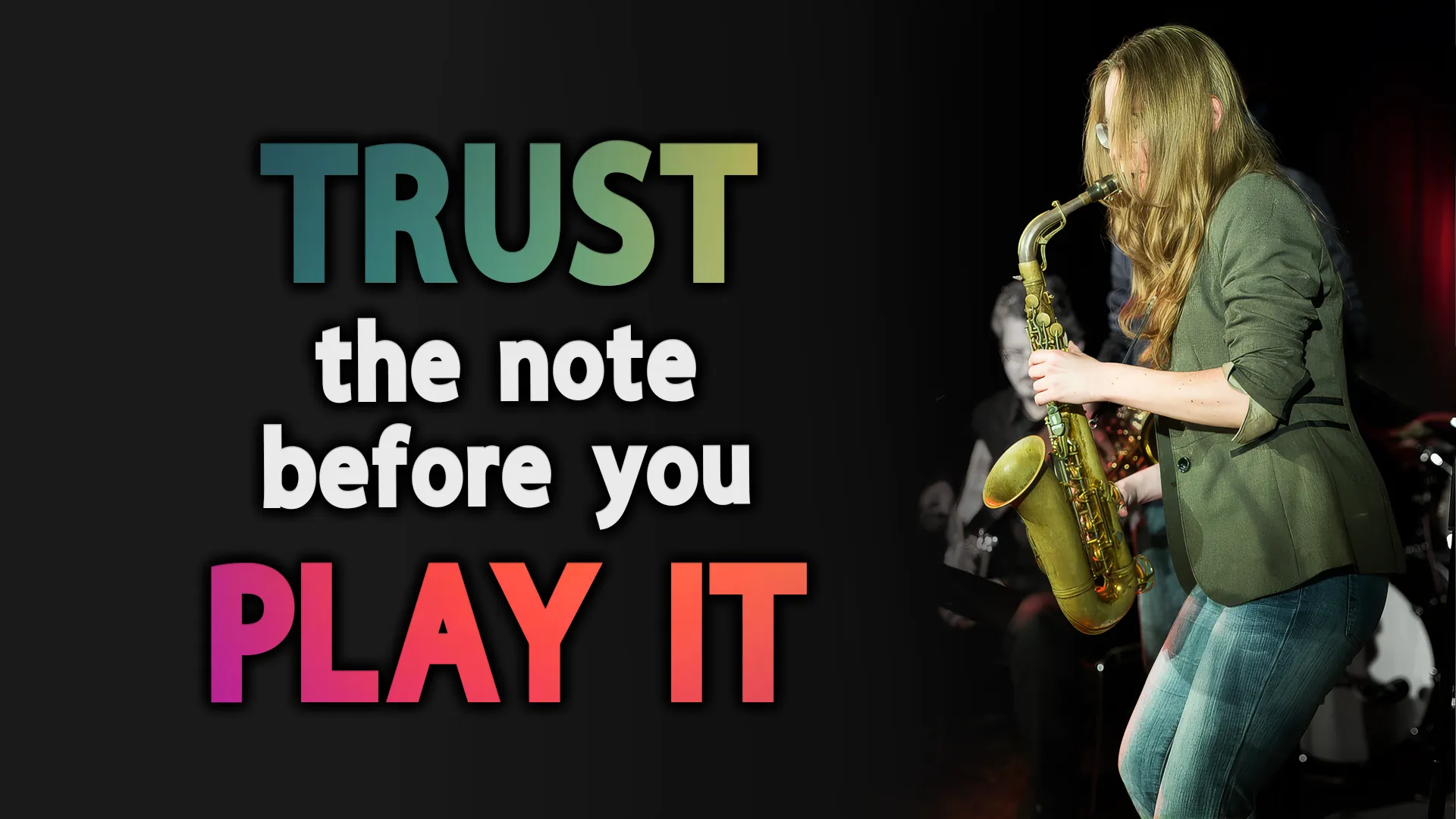
Trust the note before you play it – in life and at work.
I come from the flute. There, every note was written down. So for a long time I was genuinely puzzled by improvising musicians. I mean… how do they decide what to play when nothing is written? When everything has to come from their own mind, in real time?
Imagine two improvising musicians on stage. One plays a few notes, and the other suddenly stops: “Hey, you can’t play that!” – Hard to picture, right? 😅
When you improvise, there’s no “no.” You always, always say “yes” – and then build on it. That’s one of the few but essential rules of improvisation.
So how do you choose what to play? My saxophone taught me a few things.
The secret is building a set of notes and rhythms – your repertoire – and then, on stage, you let all of that go. You trust your intuition, shaped by everything you’ve experienced so far and by what you experience in that moment.
That’s how I work in coaching.
Sure, I know the concepts about emotions, cognition, and physiology. The theories about stress or leadership. The interventions or methods to achieve goals. But when I’m coaching, it’s all about being present, accepting what is, and responding in the here and now. Within my repertoire – and often beyond it – I improvise.
How about your life and work?
It’s no secret that I see improvisation as a key skill today. As a professional, you already bring your set of skills to handle group dynamics and business challenges. Yet there’s always more to learn and refine.
In coaching, you deepen your knowledge in leadership, communication, relationships, teamwork, and health – whatever helps you thrive in your current role or prepare for your next career step.
And yes, decision-making counts as a core competence too!
But instead of following hacks or blueprints blindly, we make these methods and frameworks yours – so you can act with intuition, adapt fluidly, and confidently improvise through your actions.
With the second perspective Use Improvisation and Intuition, you’ve mastered your solo. But you’re not alone, are you? Next up: what happens when your groove meets someone else’s?
New to this series? Start here →
Photo credits: Klaus-Peter Wittemann, modified by me

Christine Paulus
ENGLISH | DEUTSCH