Coaching is not about the methods.
You won’t become the best violinist just by playing a Stradivari. You won’t become a great racing driver simply by getting a Ferrari. A cool coaching method alone will not have the big impact. But having great gear – and a solid repertoire – definitely helps.
Now that we’ve explored my overall coaching attitude and approach, as well as the underlying framework and theory, we arrive at the final question: what are the concrete and practical methods in coaching? And how do they connect to each other, to your situation, and to your goals?
So what is my repertoire?
I thought it might be helpful to have a neatly organized toolbox – with different compartments so you know exactly where to look when you need something. Turns out, I didn’t need to reinvent the wheel!
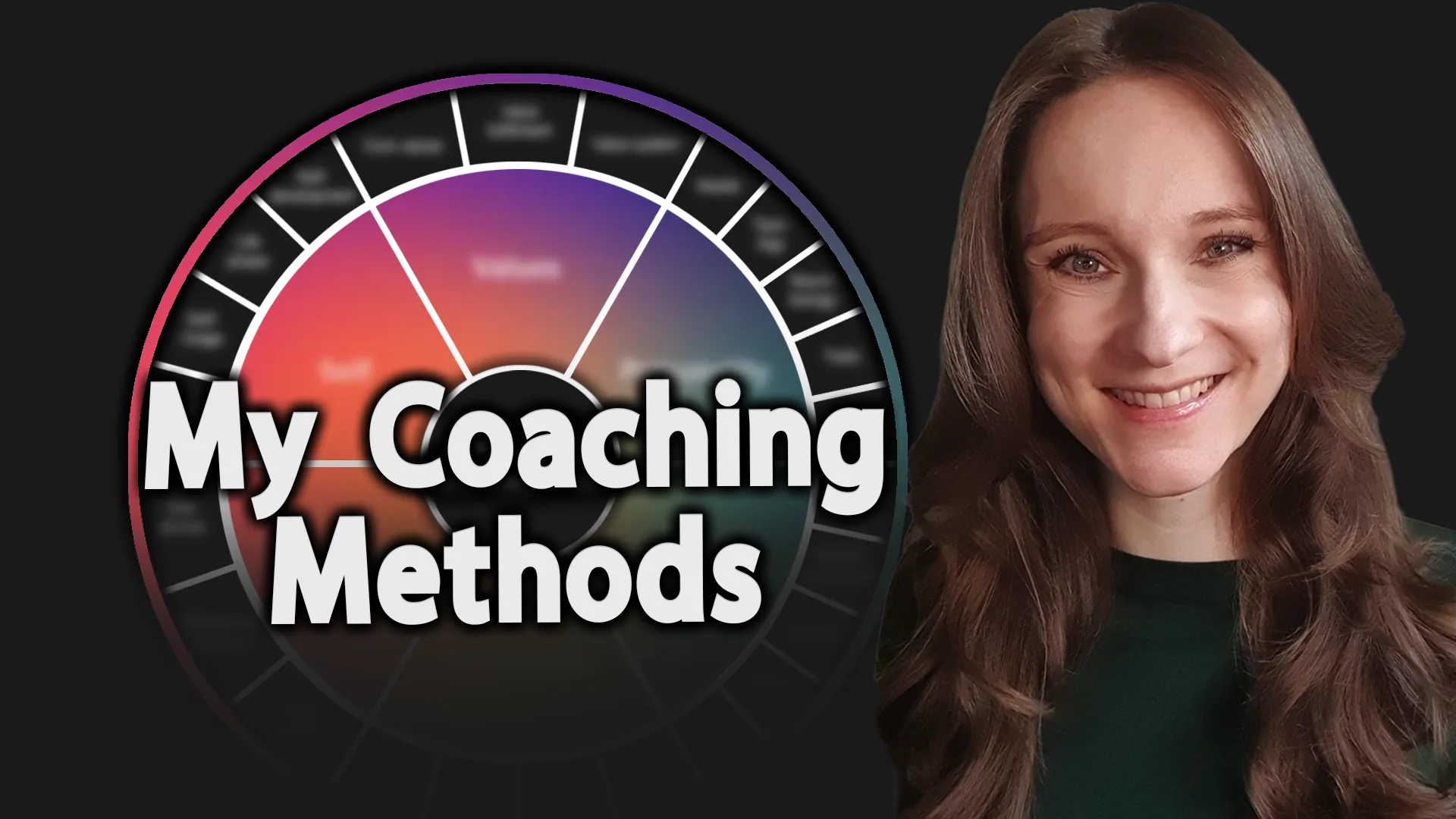
Instead, I’d like to highlight the so-called Integral Development Process, developed by the Coaching Center Berlin, where I completed 240+ hours of advanced coach training.
It consists of six areas, each essential for human development: values, personality, skills, knowledge, concepts, and self. But first things first:
My Goal – What do I want?
There’s is no coaching without a goal. The starting point is always your current situation and your goal: Where am I now, and where do I want to go? Sometimes this sounds simple – but it often isn’t. That’s exactly where our coaching begins.
We start with an assessment of your current situation:
- Which areas for development have you identified yourself?
- What’s happening in your life and business right now?
- What are your personal and professional goals?
- What feedback have you received?
We use methods like visualizing or writing exercises to help you get a clear picture of what you want. You set goals for the overall coaching process – and for every single coaching session.
Based on your answers,
We focus on the area that is most relevant to you at the moment – whether that’s values, personality, skills, knowledge, concepts, or self.
But we don’t work randomly. Quite the opposite, we already learned how important it is to know the collective context!
My Context – What surrounds me?
So, of course, your work on these areas happens within your personal context. Being a parent of two with a half-time corporate job is different from being a single founder building and leading a startup. Location also matters: living in Asia, Latin America, or Europe brings different cultural and social dynamics.
Beyond organizational context – the company you work for, your department, or your team – your environment also includes your family, social network, and cultural surroundings.
In coaching, we always consider your growth within the bigger picture: societal, organizational, social, and physical contexts all play a role.
And then…
Depending on which area we focus on, I draw on specific methods and tools – all while improvising with you in our co-creative process!
Now it’s time to talk about what truly matters – to you. Next up: How do your values shape your decisions, actions, and impact?
New to this series? Start here →

Christine Paulus
ENGLISH | DEUTSCH